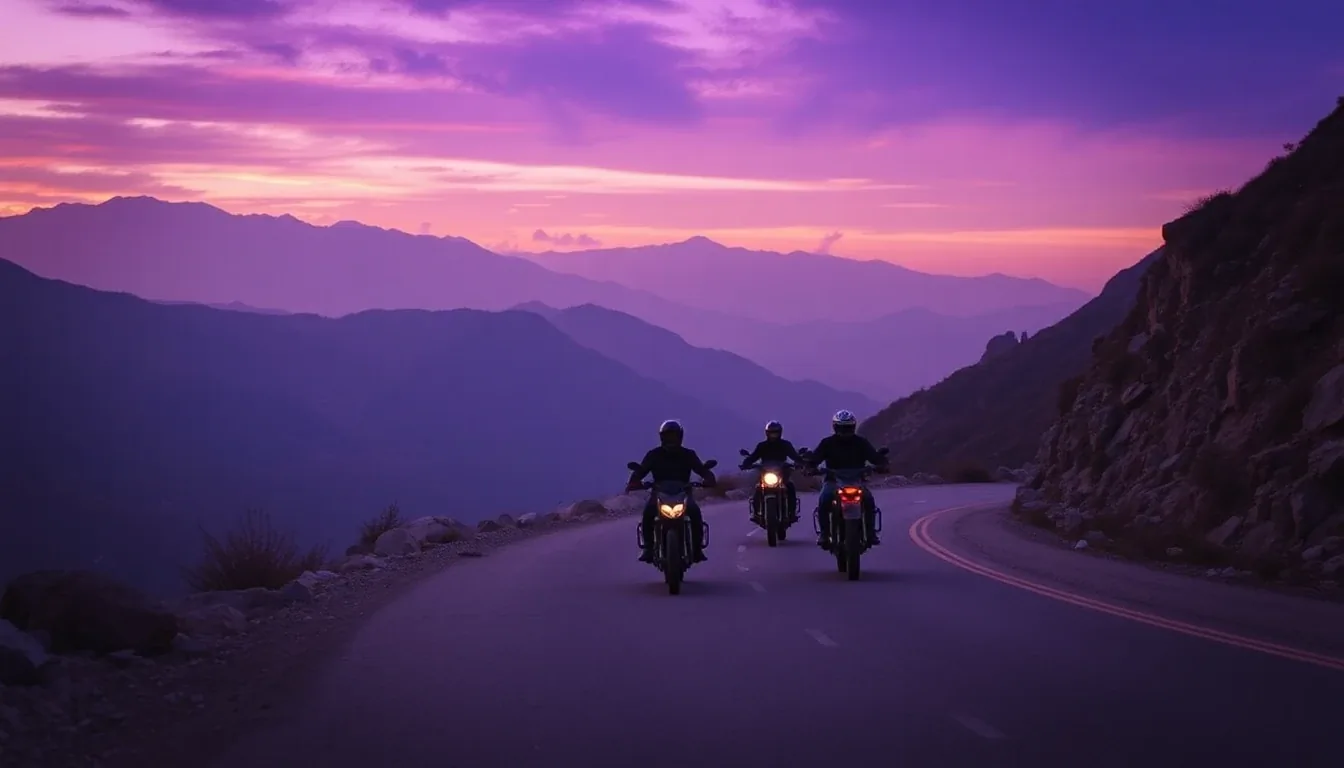
The freedom of solo: your pace, your rules
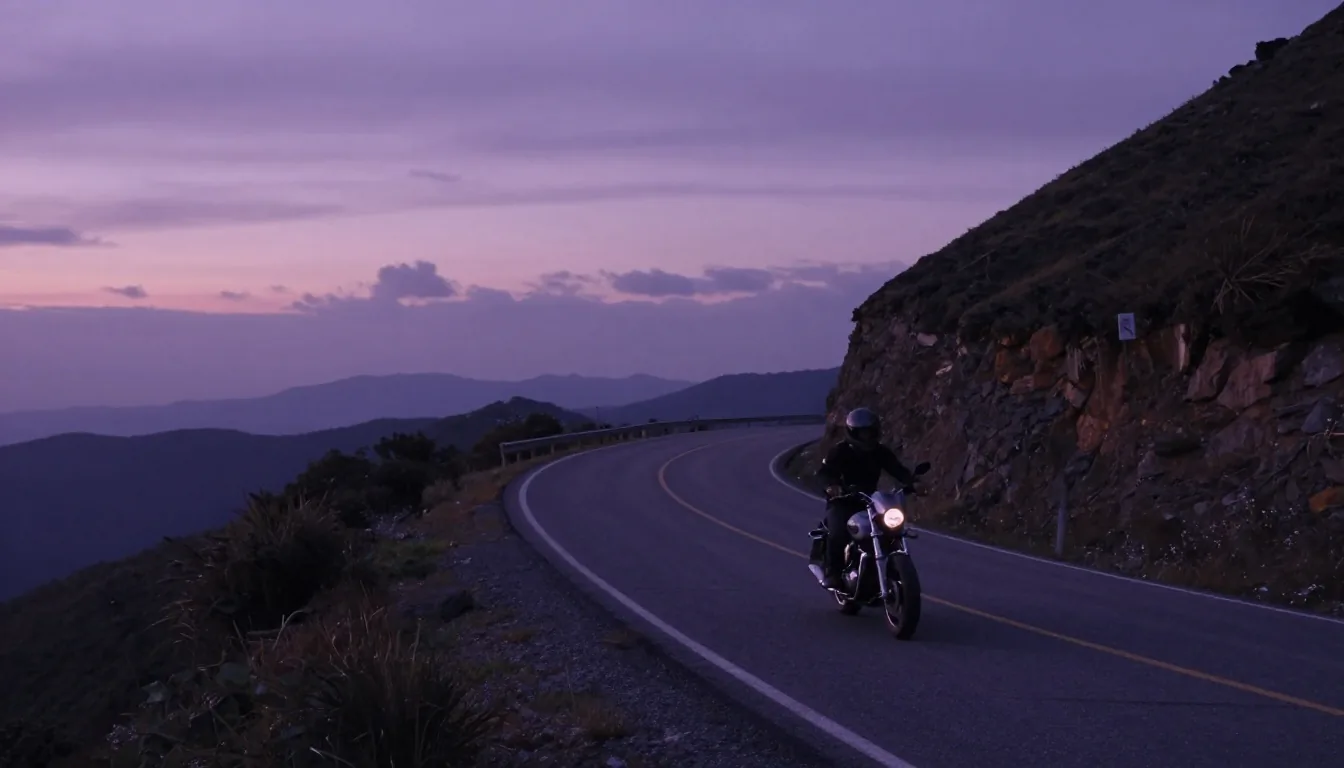
Riding solo is the purest form of motorcycle freedom. You leave when you want, stop wherever you feel like, and ride at your own pace. No compromises on the route, no stress about keeping the group in sight, no endless debates about the next coffee stop.
Solo riding is also a form of meditation. Alone with your bike and the road, you enter a state of total focus where everyday worries fade away. Many riders describe it as therapy — and science backs them up: motorcycle riding lowers cortisol (the stress hormone) and boosts endorphin production.
Planning is also much simpler when you ride alone. There's only one schedule to manage: yours. You can extend a leg, shorten another, change destination on the fly. That flexibility is unmatched.
The strength of the group: connection and safety
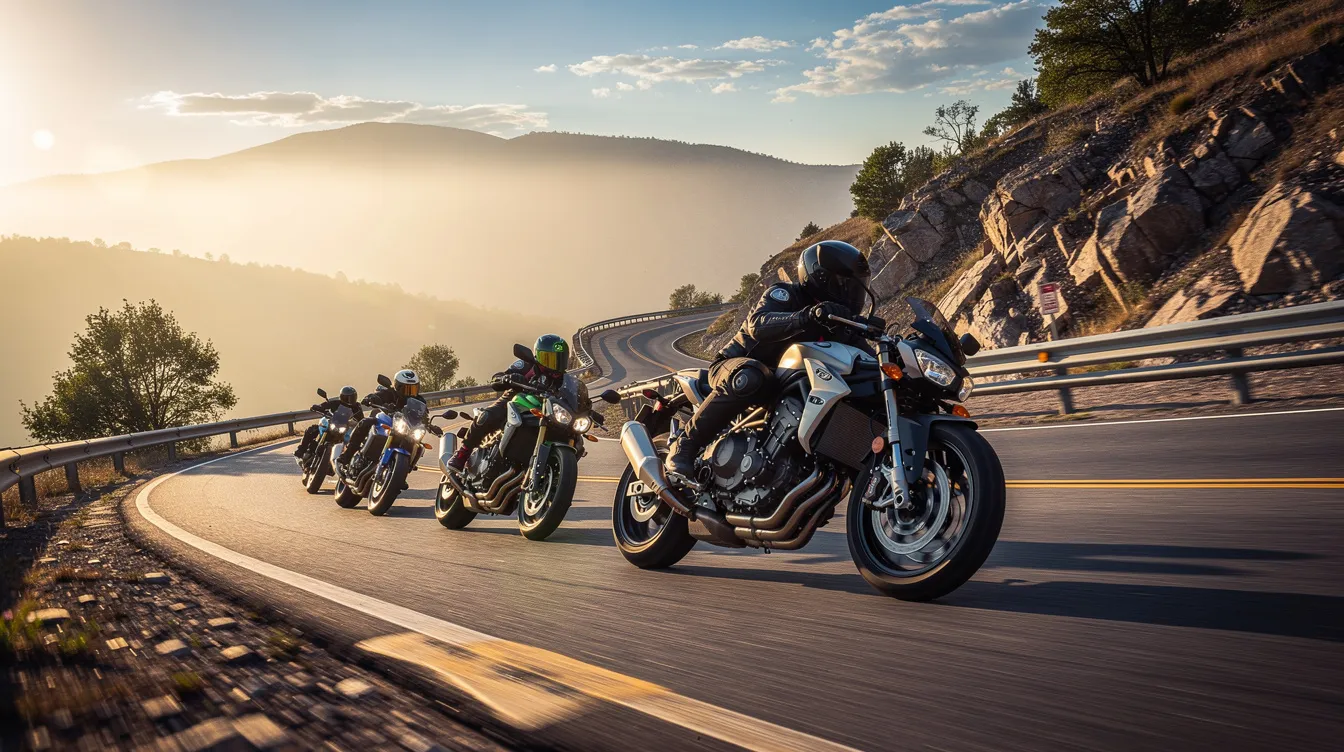
Riding in a group is about shared emotions. The camaraderie when you chain corners together, the laughs at the rest stops, the stories over dinner — these moments build lasting memories and stronger friendships.
Safety is a major argument too. If you have a breakdown, a fall, or a mechanical issue, you're not alone. Someone can call for help, lend you a tool, or simply keep you company. On isolated mountain roads, that's a huge advantage.
The group also pushes you to discover new places. When someone else picks the route, you end up on roads you'd never have ridden alone. It's an open window onto different horizons.
The challenges of each style
Solo challenges:
- Nobody to help if you break down in a remote area
- Can get monotonous on very long highway stretches
- No one to take photos of you riding
- Undetected fatigue — no buddy to say « you look beat, let's stop »
Group challenges:
- The pace is dictated by the slowest rider in the group
- Constant stress of losing the group in corners or at intersections
- Stopping at every roundabout to « count heads »
- Skill gaps between riders can create tension
- When someone falls behind or breaks down, nobody knows until the next stop
Vroom Crew mode: see every rider in real time
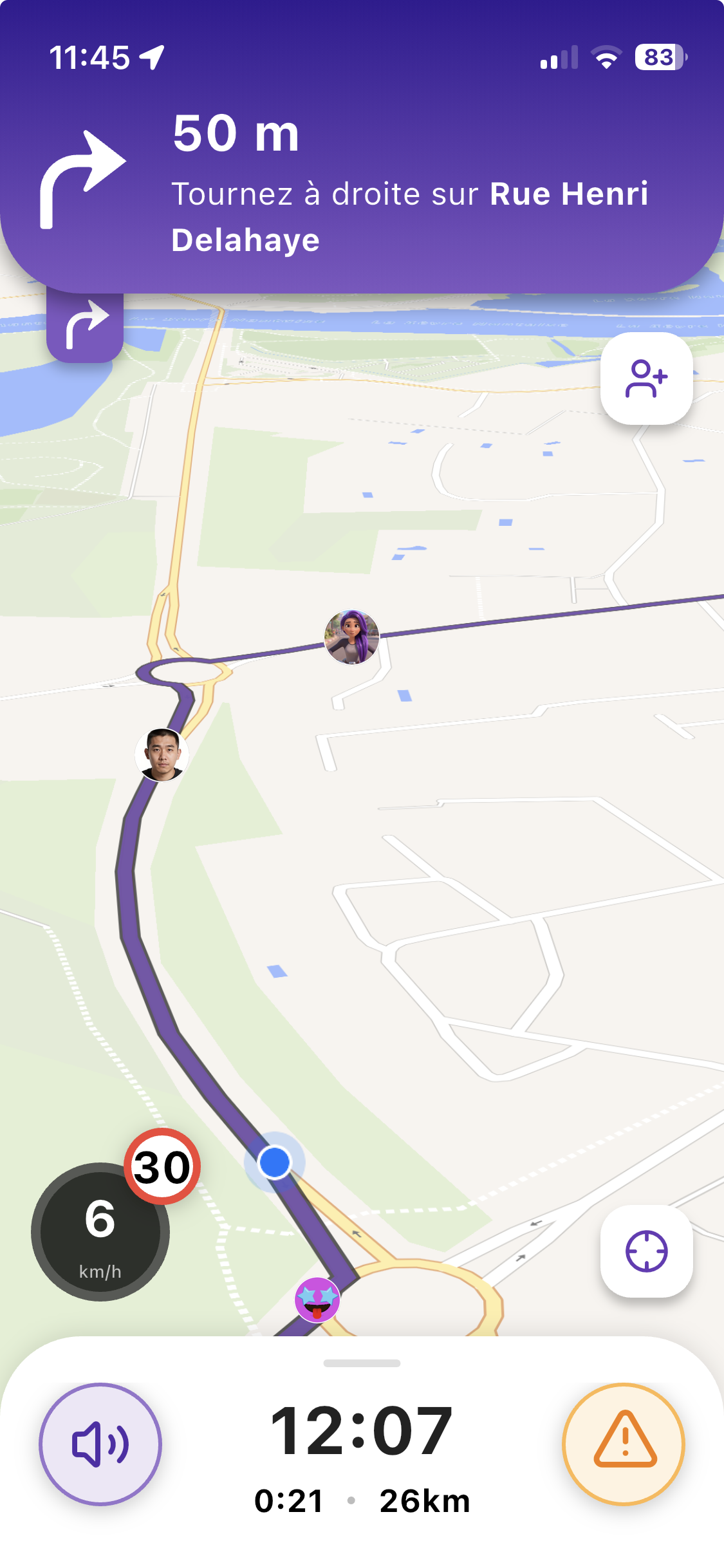
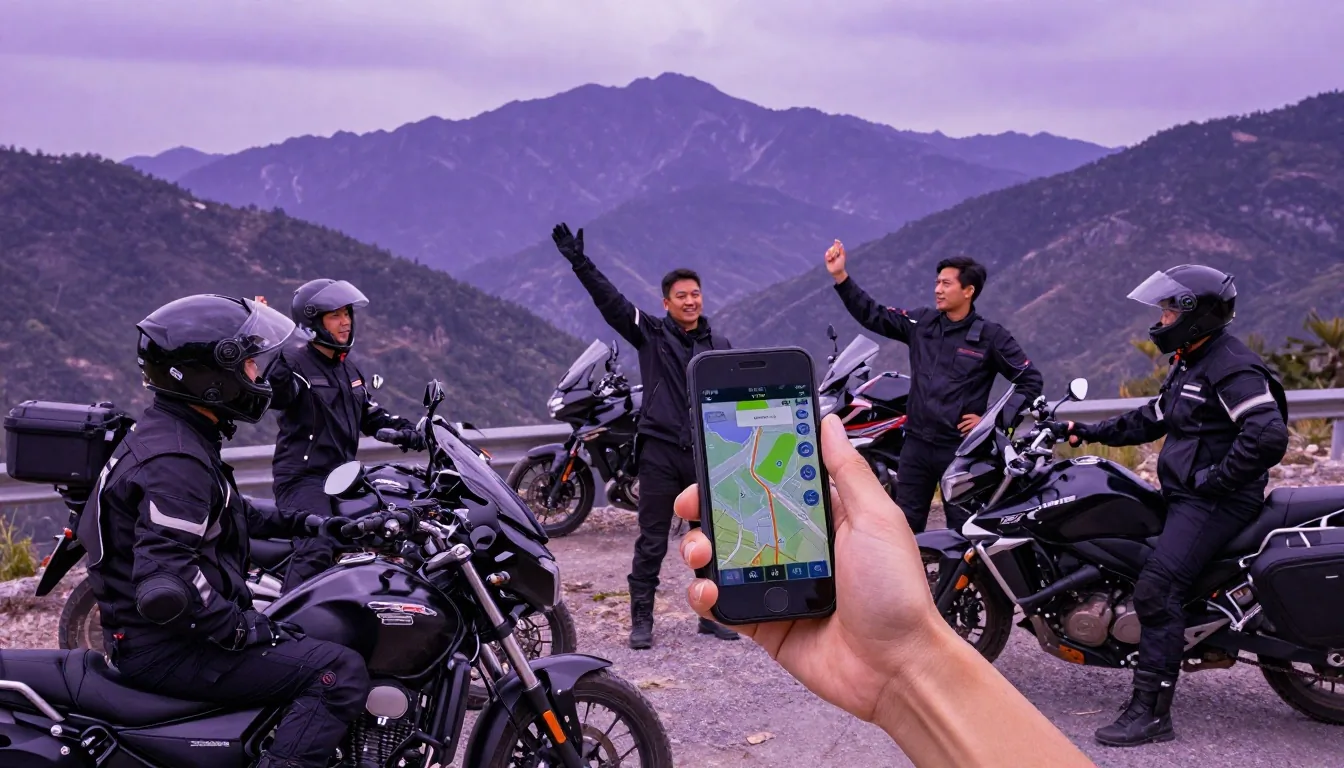
This is exactly why Vroom GPS built Crew mode. The idea is simple: every rider in your group appears on everyone else's map, in real time, with their GPS position updated continuously.
Here's what you actually see on your screen during the ride:
- Live GPS position of every rider as a colored icon on the map, with their nickname and heading.
- The shared group route drawn in purple, identical for everyone.
- The distance between you and each member, updated continuously.
- Each rider's status: riding, stopped, offline, or arrived at the meeting point.
No more stopping at every intersection to wait. The leader knows the tail rider is following. The tail rider knows where the lead is. Everyone rides at their own pace with peace of mind, because the whole group is visible on the map at all times.
Alerts pushed to the entire group
Real-time tracking isn't only about seeing your buddies on a map. It powers an alert system that notifies the entire group when something happens. This is where Vroom goes beyond a basic location-sharing feature.
A few concrete examples of alerts pushed automatically to all members:
- Rider stopped too long: if a member hasn't moved for several minutes while they were riding, the whole group gets notified. Useful to detect a breakdown, a flat tire, or a crash.
- Rider dropped behind: if the distance to the rest of the group exceeds a threshold, everyone is notified. The leader can slow down, the tail rider can check in.
- Off-route deviation: if a rider leaves the planned route, the group knows immediately they've taken a different road.
- Member arrived at meeting point: every arrival at the hotel, restaurant or rest stop is broadcast to the group.
- Manual alert: in two taps, any rider can send a custom alert to the whole crew (« need help », « stopping for fuel », etc.).
Tips for a successful group ride
Even with a Crew GPS, a few classic rules make the ride much better:
- Pre-ride briefing: route, planned stops, hand signals, intercom channel.
- Lead and tail: designate an experienced leader at the front and a reliable rider at the rear.
- Everyone at their own pace: never ride above your level just to keep up. That's how accidents happen.
- Subgroups by pace: if possible, split into subgroups by skill level. Crew mode keeps them all connected.
- Check your battery: real-time GPS uses data. Bring a phone mount with charging on the bike.
Our advice: do both
The best riders are the ones who enjoy both styles. Use solo for your decompression rides, personal exploration, and spontaneous road trips. Bring back the group for big adventures, events, and weekend getaways with friends.
And when you ride with the crew, let technology smooth out the friction: Vroom GPS's real-time map to see everyone, automatic alerts so nothing slips through, and a clear briefing before you leave. The group ride becomes as fluid as a solo run — with shared memories as a bonus.
Ready to See Your Whole Crew on the Map?
Download Vroom GPS for free and turn on Crew mode with your riding buddies.

