Why wet roads are so unforgiving
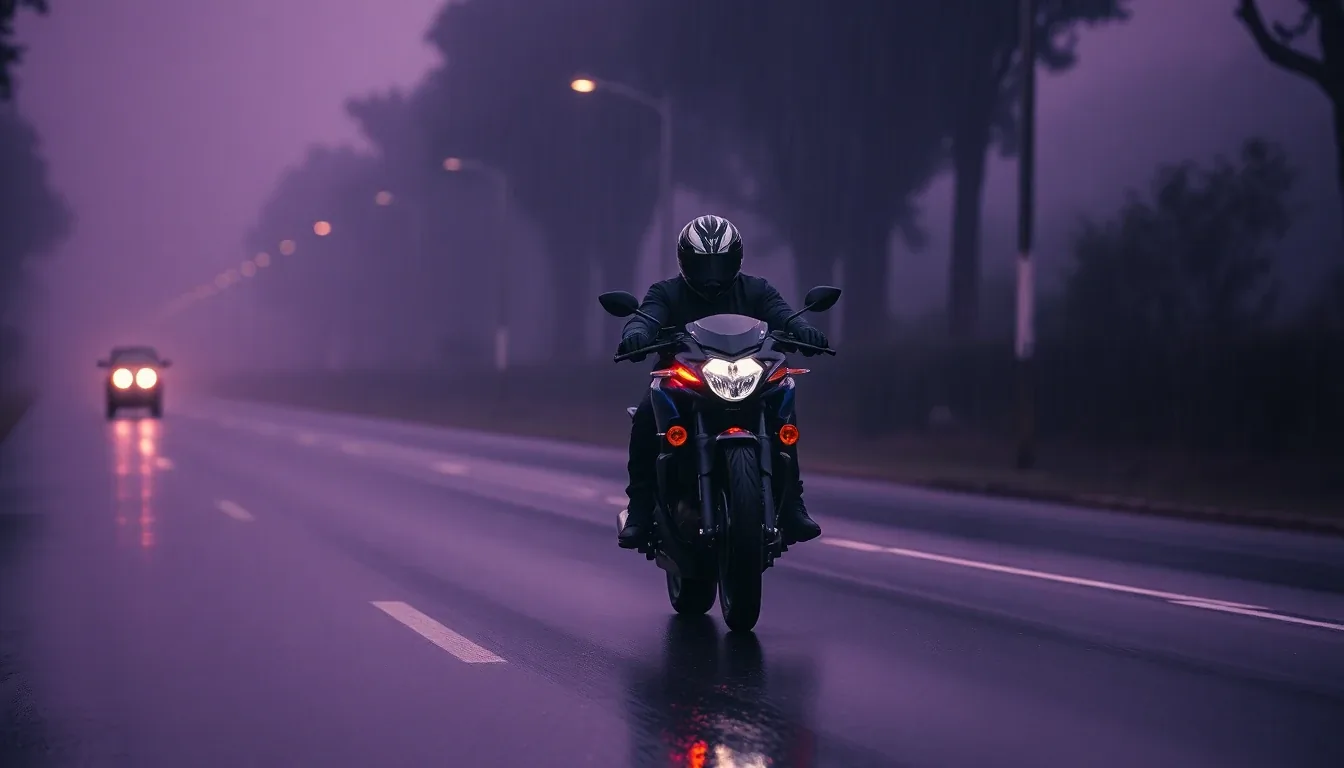
A motorcycle tire only touches the road on a contact patch the size of a credit card. In the dry, that patch grips at well over 1 g. In the rain, available grip can drop to 40–60 % of dry levels — even less in the first minutes of a shower, when oil, rubber dust and diesel residues float to the surface before being washed away.
That is why the first 15 minutes of rain are the most dangerous. After a long dry spell, the road becomes a slick of contaminants. The smart move is often to pull under a bridge or into a fuel station, drink a coffee, and let the rain do the cleaning before you set off again.
The other invisible danger is the network of painted lines, manhole covers, tar snakes and railway crossings. All of them behave like ice under a wet tire. Crossing them upright, with no brake input, is the only safe way to handle them in the rain.
The right gear: dry, visible, warm
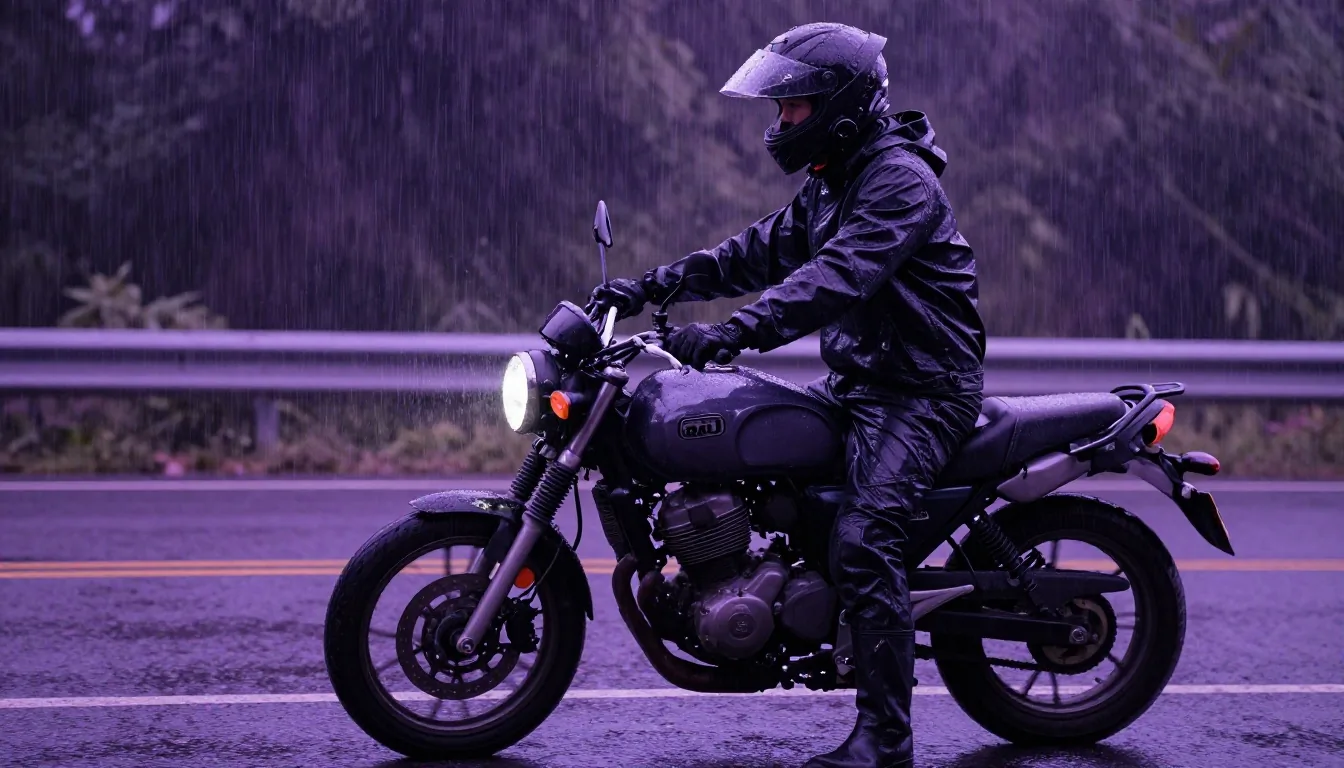
Trying to ride well in the rain while you are soaked and freezing is a losing battle. Your body locks up, your inputs become jerky, your concentration collapses. The gear matters as much as the technique.
- Waterproof suit or oversuit: a true membrane (Gore-Tex or equivalent) or a one-piece rain oversuit you can pull over your regular gear. Cheap rain gear lasts one trip — invest once.
- Waterproof gloves: cold, wet fingers can't operate a clutch or front brake with finesse. A second pair of gloves in a dry bag is a game changer on long trips.
- Waterproof boots: water always finds a way in through the ankle. Tall boots with a sealed gusset, worn under the trouser leg, are the only thing that really works.
- Anti-fog visor treatment or Pinlock insert: a fogged-up visor in the rain is the most common cause of crashes on the highway. Don't skip this.
- High-visibility element: a fluorescent vest, hi-viz panels or a bright helmet. In the rain, car windshields are streaked and drivers see less than half of what they normally would.
Riding technique on wet roads
Good wet-weather riding is about smoothness. Every input — throttle, brake, steering — must be progressive. Brutal inputs are what break a tire's already reduced grip.
- Look further ahead. In the rain you need to anticipate twice as much: braking distances double, your visibility is halved. Read the road 100 m ahead, not 20.
- Brake earlier and progressively. Squeeze the front brake, don't grab it. Use the rear brake more than usual to stabilise the bike. Modern ABS is a real lifesaver in the wet — use it.
- Lean less, slow more. Reduce your corner speed by 20–30 % and lean the bike less. The more upright the tire, the more rubber on the road.
- Avoid the centre of the lane. That's where oil and diesel accumulate. Ride in the « wheel tracks » left by cars — cleaner and grippier.
- Stay loose on the bars. A tense rider transmits every twitch to the front wheel. Relax your shoulders, grip with your knees, let the bike float a little.
- Increase following distances. Double the gap you keep behind cars. Trucks throw spray that blinds you for several seconds — never overtake one in a curve in heavy rain.
Visibility: see and be seen
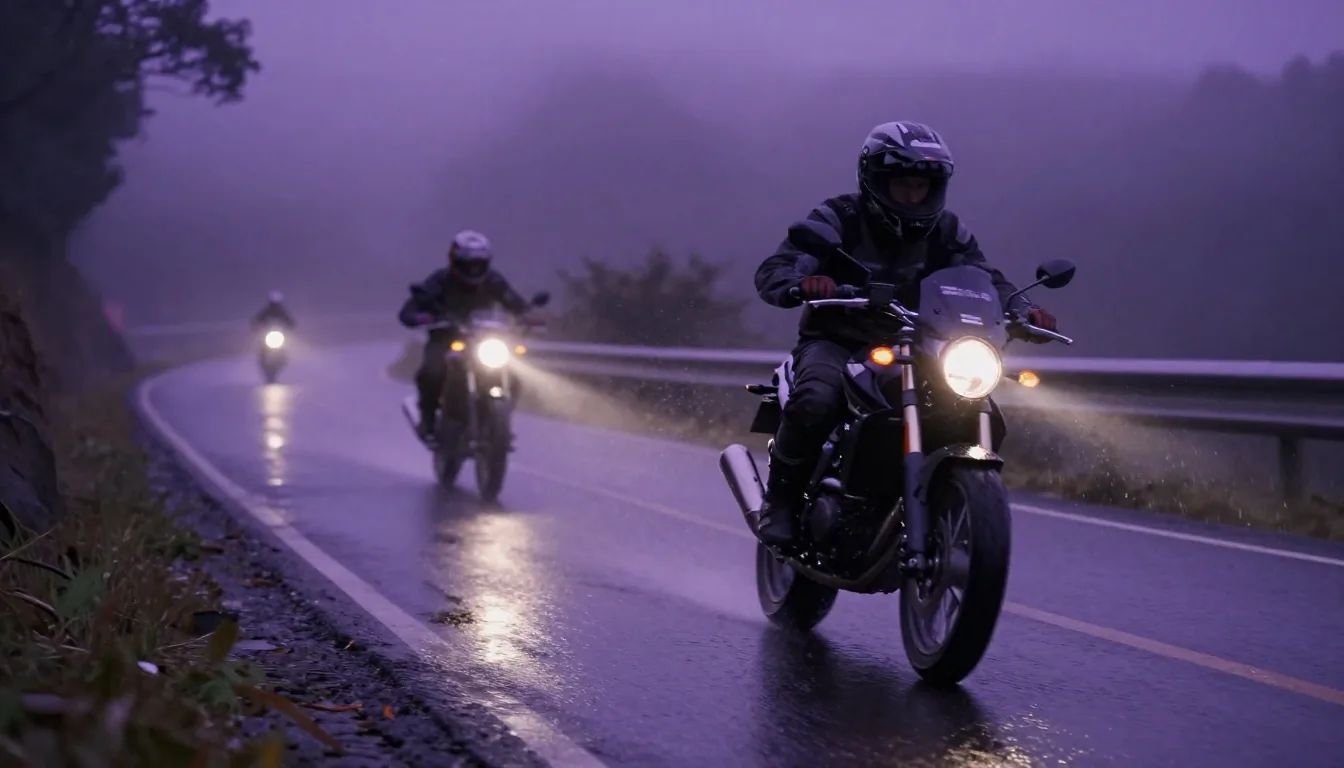
Rain attacks visibility from both directions. Your visor fogs, your mirrors fill with droplets, and drivers around you have streaked windshields and tunnel vision. A few simple habits make a huge difference:
- Lights on, always. Even in daylight, in the rain. Some bikes have an auto mode — double-check it's on.
- Position yourself in mirrors. Ride where the driver in front of you can actually see you, not in the blind spot.
- Wipe your visor often. The little squeegee on your left index finger (or a rain-x style treatment) clears droplets in one motion at low speed.
- Anticipate gusts. Bridges, gaps between trucks, exposed plateaus — in the rain they often come with crosswinds. Tighten your grip and stay loose.
How a smart GPS changes wet-weather rides
Choosing the right route is half the battle in the rain. A motorcycle GPS designed for riders — not a generic car app — lets you adapt the trip to the conditions instead of stubbornly following the same « thrilling » pass you planned for a dry day.
With Vroom GPS, that adaptation happens in seconds:
- Switch to a calmer profile. Drop your « Thrilling » or « Fast » profile to « Touring » or « Eco » in two taps. The route avoids the most aggressive switchbacks and favours wider, better-paved roads.
- Avoid unpaved roads. Gravel is a nightmare in the rain. Profiles avoid unpaved sections by default — a key safety net when a shortcut looks tempting on the map.
- Glove-friendly UI. Big buttons, big text, big maneuver icons. With wet, cold gloves you don't want to be pinch-zooming a tiny interface.
- Clear voice instructions. Keep your eyes on the road, not on the screen. Critical in the rain when looking down for two seconds can cost you a corner.
- Crew alerts. Riding in a group in the rain? If a buddy stops moving or drops behind, the whole crew gets notified automatically. In bad weather, that early warning matters even more.
When to stop — and where
Knowing when to stop is part of riding well. There are conditions where the right decision is to pull over and wait it out:
- Hail. Never ride through hail. Visibility drops to zero, the road becomes a marble run, and the ice hurts. Stop under a bridge or in a covered area immediately.
- Thunderstorms with lightning nearby. Beyond the rain, the wind gusts are violent and unpredictable. Find shelter.
- Heavy localised downpours. If you can't see 50 m ahead, neither can the driver behind you. Pull over with hazard lights on, well off the road.
- Flooded sections. A few centimetres of water can hide a pothole, a sinkhole, or a current strong enough to push you over. Turn around — the detour is always shorter than a recovery.
A good GPS makes those decisions easier: a quick look at the map, a reroute around the flooded valley, a new ETA, and you're moving again. Stopping is never a failure — it's a tactical pause.
After the ride: care for the bike
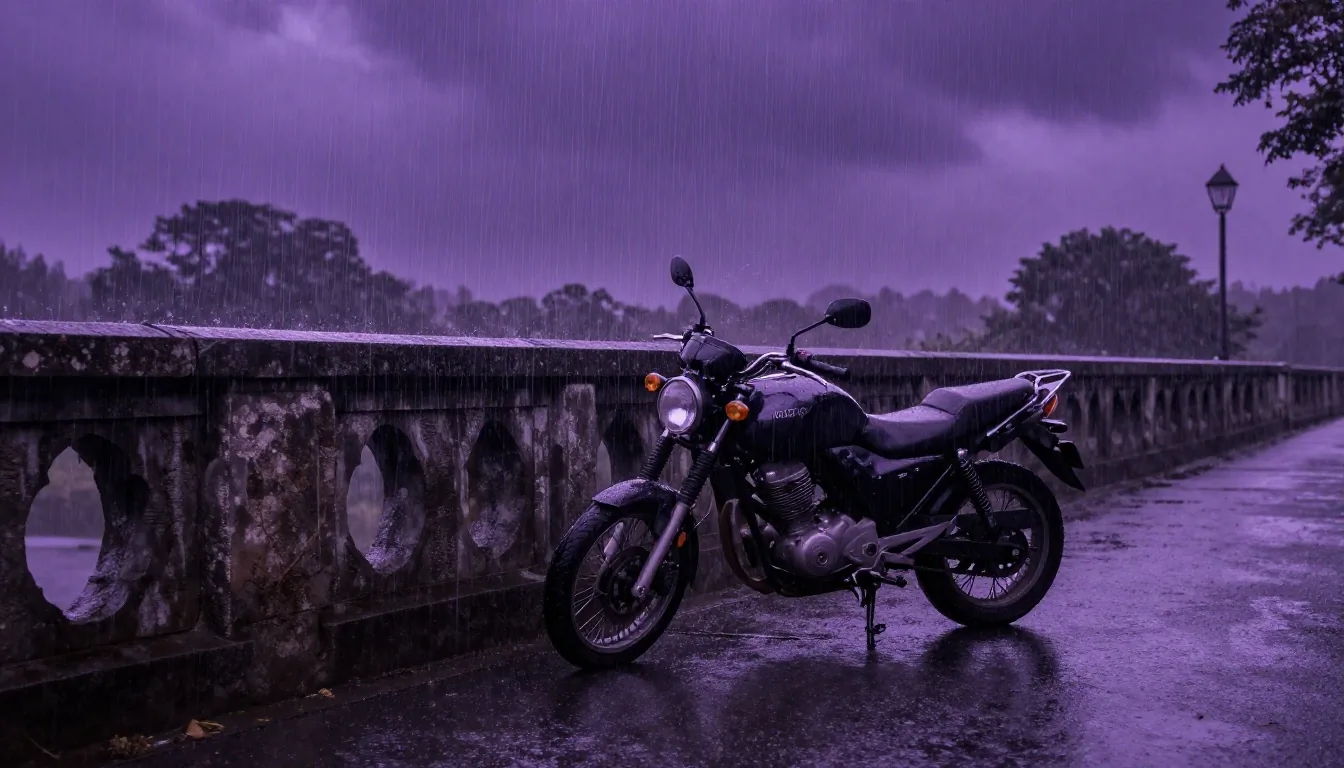
Rain doesn't only test you, it punishes the motorcycle. A few minutes when you get home make a huge difference:
- Rinse off the salt and grime with clean water, especially in winter or near the coast.
- Lube the chain while it's still warm. Rain strips the lubricant in a few kilometres.
- Dry inside the helmet and the gloves. Stuff them with newspaper if needed — mould and bad smells start in 24 hours.
- Check tire pressure before the next ride. Cold pressures drop faster than you think between sessions.
Ride Smart, Even in the Rain
Download Vroom GPS for free and switch profiles in two taps when the weather turns.

